Required Qualifications
- Dogging (DG)
Objective
This work method statement details the requirements for the inspection and maintenance of lifting equipment and establishes safe work practices for the care and use of load bearing slings and rigging accessories.
Definitions
- Competent Person – A person who has acquired through training, qualification (such as Dogger/Rigger and/or Rope, Chain and Sling Inspection Certification) or suitable practical experience or a combination of these, the knowledge and skills enabling that person to correctly perform the required task. A competent person must hold a High Risk Work License in Dogging.
- Dogger – A trained person who uses techniques, including the selection or inspection of lifting gear to safely sling a load, or directs a crane or hoist operator in the movement of a load when the load is out of the operators view. Refer High Risk Work Licences
- Flexible Steel Wire Rope (FSWR) – Rope constructed of wires and strands laid around a central core.
- Lifting Accessories – Hardware typically used in conjunction with a sling includes but is not limited to shackles, eye bolts, rings, hooks, etc.
- Lifting Gear – is a general term used to describe the various equipment and accessories used to lift and suspend loads, and includes slings made from chain, flexible steel wire rope, flat webbing and round synthetic slings and hardware accessories used in rigging and lifting tasks.
- Minimum Breaking Force – is the minimum force at which a sling or accessory during manufacturer testing has been found to break when a constantly increasing force is applied in direct tension.
- Proof Test – is a term designating the minimum tensile force which has been applied to a product under constantly increasing force in direct tension during manufacturing processes.
- Qualified Inspector – A competent person, recognised as being authorised to provide certification, inspection and testing of hoisting and rigging equipment.
- Sling – An assembly which connects the load to the material handling equipment (Crane, Hoist, etc.). These can be made of chain, wire rope and synthetic material.
- Slinging Techniques – Means the exercising of judgement about the suitability and condition of lifting gear and the method of slinging, including consideration of the nature of the load, its mass and centre of gravity.
- Working Load Limit (WLL) – (rated capacity) is the maximum load that shall be applied in direct tension to an undamaged straight length of chain, strap, fitting or accessory.
Procedure
Risk Assessment
Overhead lifting presents a very real danger of serious personal injury, including loss of life and damage to property or the environment if lifting gear is not safe for use, and safe lifting practices are not followed. Accidents involving lifting activities can happen due to many causes. High risk factors include failure of lifting equipment, poorly maintained slings, unbalanced loads, falling objects, defective safety devices, unsafe work practices and improper rigging methods.
Potential hazards are striking or crushing of persons, damage to equipment and plant, chemical spills and exposure to hazardous substances caused from collapsing/falling loads. The following are some common hazards associated with the lifting of loads:
- defective or damaged lifting gear such as slings, hooks, inserts, shackles
- unstable or unsecured loads
- under capacity of lifting equipment
- failure to identify and maintain a safe exclusion zone
- absence or deficiency of risk assessment prior to lifting operations
- absence or deficiency of a Safe Work Method Statement or Lifting Plan
- lack of implementation of relevant control measures identified in the risk assessment and Safe Work Method Statement (SWMS)
- unsafe slinging technique work practices
- insufficient training and supervision
A Risk Assessment is to be undertaken prior to the work commencing for all slinging activities carried out on Steelworks Engineering Work sites. A Safe Working Method Statement and/or lifting plan must develop before commencement of any lifting operation. The worksite Supervisor shall stop the lifting operation immediately if it deviates from the SWMS approved by the project manager.
Lifting Gear
A variety of lifting gear is available to lift loads and includes slings made from chain, flexible steel wire rope, flat webbing and round synthetic material. All lifting gear used on Steelworks Engineering work sites shall have undergone “Proof Testing” by the manufacturer prior to purchase.
Lifting devices must be marked with a serial number that correlates to a proof test certificate. There are some exceptions to this rule such as shackles AS2741-2002 which are batch tested, however all synthetic slings, chain slings, wire rope slings and lifting devices must have a legible serial number as well as the Working Load Limit (WLL).
The selection of lifting gear should take into consideration the manufacturer’s recommendations, nature of the load, the potential for damage to the lifting gear or the load itself, the operating environment and the suitability of the lifting gear for the type of lift being undertaken. Each sling and accessory is to be labeled with the Working Load Limit (WLL). Slings and accessories shall be subject to regular inspection for damage by a competent person before and after each use, and periodic inspection and testing by a qualified, authorised inspector to ensure certification and compliance.
Chain Slings
Chain slings are the most common slings used on Steelworks Engineering work sites and are recommended for use because of their more durable qualities comprising of their comparative strength, flexibility and excellent performance in harsh environments.
Chain slings can better withstand environmental conditions, rough handling and can be stored without deterioration. However, it must be noted the strength of steel chain slings and in particular alloy chain slings can be affected by chemically active environments and high temperatures.
Chains slings if used and stored incorrectly are also susceptible to abrasion and corrosion. Reference to the manufacturer recommendations before the sling is used in chemically active environments or work locations which are subject to high temperatures are required.
Chain slings can be identified by their markings or grade which details by order their tensile strength (Work Load Limit WLL).
Chain slings are identified as follows:
- size
- the rated load
- length (reach)
- grade:
- mild steel chain sling – stamped L
- high tensile chain sling – stamped P
- higher tensile chain slings – branded T.8.80.100.A.800.PUB or CM and HA800
In addition, chain slings may be marked to show:
- multi leg slings -Number of legs, the reach and identification of the angle the load rating is based on
- individual sling identification (i.e.. serial number)
- the name or trademark of the manufacturer
Chain slings are considerably heavier than flexible steel wire rope slings (FSWRS) or synthetic slings of the same lifting capacity. When using chain slings workers must make sure they use correct manual handling techniques as outlined in the Work Method Statement Manual Handling
Higher grade chain slings can be utilised to minimise the weight of the chain sling, and therefore reduce manual handling issues e.g. an 8mm (Grade 80) 2 leg chain sling will lift 3.5 Tonne. An 8 mm (Grade 120) 2 leg chain sling will lift 5.2 Tonne. The same size chain in a higher grade will lift heavier loads but the weight of the chain sling stays the same. A 10 mm (GR80) 2 leg chain sling will lift 5.5T onne which is very close to a 2 leg x 8 mm in grade 120.
Flexible Steel Wire Rope Slings (FSWRS)
Are made of plaited strands of wire which are formed into a thick cable (helix) usually made up of carbon steel wire. FSWR slings are abrasive/ fatigue resistant and have the ability to conform to the shape of the loads on which it is used. The lay of a wire rope cable (left hand or right hand lay) describes the manner in which either wires in a strand or the strands in the rope are laid to form the rope.
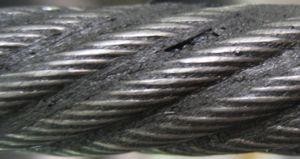 | 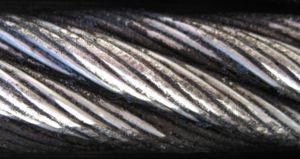 | |
| Left hand ordinary lay (LHOL) wire rope strands are twisted to the left | Right hand Lang’s lay (RHLL) wire rope stands are twisted to the right like a screw conventional thread |
Wire rope slings are also subject to damage resulting from contact with sharp edges of the loads being lifted. These edges can be blocked or padded to minimize damage to the sling.
Synthetic Flat and Round Slings
Synthetic slings are popular because of their strength, flexibility, good elasticity qualities and are comparatively light weight and easy to handle. Synthetic slings are mostly used with loads that require protection from damage or because of the slippery composition of the material being lifted.
Synthetic slings must comply with:
Synthetic slings are prone to damage and deterioration due the fact they are often made from polypropylene, polyester, polyamide, nylon or any combination of these materials. Synthetic slings are susceptible to cuts if exposed to sharp edges and can be damaged due to environmental conditions such as exposure to water and chemicals.
If the risk assessment has identified the use of a synthetic sling it must be inspected prior to each use to ensure it is safe to use and fit for purpose. The load must be packed out to prevent damage to the sling and were practicable a protective sleeve must be fitted.
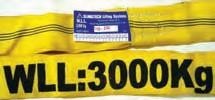
Flat webbing and round synthetic slings are labeled with the (Working Load Limit) WLL. Do not use the sling if the label is missing. Return the sling to the manufacturer for assessment and relabeling. Synthetic slings are color coded according to lifting capacity however it must be noted this should not be relied upon as an indication of the Working Load Limit (WLL) and inspection and certification of testing must be completed to ensure safe working capabilities of the sling.
 |  |
Fibre Rope
Should not be used for slinging and is prohibited for use on Council work sites unless it is used as a tag or life line.
Accessories
A lifting accessory refers to a component or device that is not permanently fitted to the lifting gear. Hardware typically used in combination with a sling includes but is not limited to shackles, eye bolts, rings, hooks, etc.
Lifting accessories are each assigned a Working Load Limit (WLL). The WLL provides a safety margin which ensures that no immediate danger will occur during normal use, provided the maximum safety working load is not exceeded.
Hardware items including rings, links and swivels must be forged alloy steel of weld less construction.
Eyebolts used for hoisting must be of equipped with shoulders or collars.
Shackles used for hoisting must be of the screw pin or bolt type. Do not use job-made hooks, links or makeshift fasteners made from bolts or rods.
Working Load Limit (WLL)
All slings and accessories undergo integrity testing (proof test and minimum breaking force testing) by the manufacture. Slings and accessories are labeled or marked by the manufacture with the Working Load Limit (WLL) which is the maximum load (identified during testing) that a piece of lifting equipment or accessory can safely lift, suspend or lower a load or object without risk of breaking.
These tests do not guarantee that all sling segments/accessories will endure the in service lifting forces applied and are considered manufacturer’s attribute acceptance tests and shall not be used as the sole criteria for serviceability. The Working Load Limit (WLL) may be affected by wear, misuse, overloading, corrosion, deformation, intentional alteration and other use conditions. Regular inspection of slings and accessories must be conducted to determine whether use can be continued at the assigned Working Load Limit (WLL), a reduced Working Load Limit (WLL) or whether the product must be withdrawn from service.
Working Load Limit (WLL) charts are available for all slings. Workers must make sure that they check the equipment/accessories WLL label and reference the correct WLL chart before lifting commences. Determination of the Working Load Limit (WLL) for slings is calculated by the lowest Working Load Limit (WLL) of the sling components or accessory making up the sling assembly. For example if the WLL of:
- the hook is 3 tonne
- the shackle is 3 tonne
- the ring is 2 tonne
- the chain sling is 3 tonne
The Working Load Limit (WLL) for the lift is 2 tonne which is equal to the part (ring) with the lowest WLL.
Selection of Slings and Accessories
All lifting equipment shall comply with relevant codes and standards and must be tagged to identity the date of the lifting gear’s last inspection. Prior to the selection of a sling a Risk Assessment WHSF 041 must be undertaken. Selection of the appropriate sling and accessories that will safely lift the load (chain, flexible wire rope, synthetic – flat or round) is evaluated by taking into account recommendations of the manufacturer, composition of the load/object to be lifted (sharp edges), load weight, angle of the lift, and the lifting environment such as extreme weather conditions, hazardous chemicals and/or substances which may cause damage to or affect the safe use of the sling. Only slings and accessories with legible identification and current inspection tags shall be used.
The risk assessment must also include the following considerations:
- the number slings are required to conduct the lift safely
- the correct length of the sling required to lift the load
- whether the lift require other fittings (shackles, etc)
- ensure shackles are prevented from unscrewing e.g.. mousing or similar
- the fittings are compatible
- each sling and accessory is designed for the task being performed and is appropriate for the loads being lifted, including adequate capacity and protection from sharp edges
- sling strength, flexibility including ability to bend without distortion and ability to withstand abrasive wear and abuse
- the Working Load Limit (WLL) of the slings and accessories is matched to the weight of load and other lifting equipment
- creation of sparks – all chains and metal attachments are capable of creating sparks unless otherwise advised by the manufacturer
If the load has sharp edges or attached components, chain or wire rope slings should be used.
The person responsible for deciding on correct sling selection, the suitability of the lifting gear and the method of slinging the load and sling accessories must have completed competency training, and where applicable must hold a high risk license to perform Dogging or Rigging.
Safe Lifting Practices
The mishandling and misuse of slings are the leading causes of accidents involving their use. The majority of injuries and accidents, however, can be avoided by becoming familiar with the essentials of proper sling inspection, care and usage. Proper care and usage are essential for maximum sling serviceability and safety.
It is important to note, that lifting equipment of all types should never be utilised for towing/vehicle recovery purposes. If a lifting device is used for towing it must be tagged out of service as the shock load applied during towing can cause a lifting device to fail when being used for a future lift. Industry best practice also recommends that chain slings not be used for towing/vehicle recovery, as when they break they pose a significant danger to anyone in close proximity. It is recommended that Tow Only synthetic style slings be used for towing and vehicle recovery.
There are five primary factors to take into consideration when safely lifting a load. They are:
- the size, weight and centre of gravity of the load
- the number of sling legs and the angel the sling makes with the horizontal line
- the rated capacity Working Load Limit (WLL) of the sling and accessories
- safe lifting procedures and practices
- the history of the inspection, care and storage of the sling
Size, Weight and Centre of Gravity of the Load
Workers are required to verify Safe Working Load (SWL), do not lift if the weight of a load is not marked on the load or the delivery docket, or it is not possible to calculate the weight. Be mindful that the load weight marked on the load or delivery docket may not be accurate – for example, timber can be 50 per cent heavier when wet, pipes and tanks are often weighted down by liquids, sludge or other materials. If the load is being lifted directly from the ground and is surrounded by materials such as sand and clay, a suction effect may be created which can substantially add to the weight of the load.
The centre of gravity of an object is that point at which the entire weight may be considered as concentrated. In order to make a level lift, the crane hook must be directly above this point. While slight variations are usually permissible, if the crane hook is too far to one side of the centre of gravity, dangerous tilting will result, causing unequal stresses in the different sling legs. This imbalance must be compensated for at once.
Number of Legs and Angle with the Horizontal
When slinging a rigid object with a multi-legged sling, it must be assumed that only two of the sling legs are taking the load. Additional legs do not increase the Safe Working Load (SWL) of the sling assembly. The SWL of a multi-legged sling assembly is assessed on the diagonally opposite legs. As the angle formed by the sling leg and the horizontal line decreases, the rated capacity of the sling also decreases. In other words, the smaller the angle between the sling leg and the horizontal, the greater the stress on the sling leg and the smaller (lighter) the load the sling can safely support. Larger (heavier) loads can be safely moved if the weight of the load is distributed among more sling legs.
Where an object is flexible and the load is evenly distributed make sure that each leg takes an even share of the load. Be careful when lifting irregular shaped objects as it is possible that only one leg of the sling is taking the whole load.
Rated Working Load Capacity of the Sling
The rated Working Load Limit (WLL) capacity of a sling varies depending upon the type of sling, the size of the sling, and the type of hitch. Operators must know the WLL capacity of the sling and all accessories used. Charts or tables that contain this information generally are available from sling manufacturers. It must be noted the values given are for new slings only and older used slings must be used with additional caution. Under no circumstances shall a sling’s rated Work Load Limit (WLL) capacity be exceeded.
Safe Lifting Procedures
Before commencing a lifting task, a risk assessment must be undertaken and Safe Work Method Statement developed. Risk assessment shall include access, work space, soil, lift capacity, lifting equipment and electrical hazards. All lifting task activities using slinging techniques shall be undertaken in accordance to the Safe Work Method Statement (SWMS).
Before use all slings and accessories must be inspected and checked to ensure they are not damaged and are safe to use. When using a chain sling make sure chains are not twisted, knotted or kinked. Make sure that safety latches on hooks are fully operable and hammer locks on chain assemblies are secure.
During lifting procedures required slings must be protected from sharp bends and cutting edges by means of cover saddles, burlap padding, or wood blocking, as well as from unsafe lifting procedures such as overloading. Keep all tags and labels away from the load, hook and point of choke, to avoid rendering the tag non-readable, and the sling therefore unusable.
Before making a lift, check to be certain that the sling is properly secured around the load and that the weight and balance of the load have been accurately determined. If the load is on the ground, do not allow the load to drag along the ground this could damage the sling and can put undue strain on the lifting gear and crane boom especially if the load is dragged from the side. If the load is already resting on the sling, ensure that there is no sling damage prior to making the lift.
After the sling is properly attached to the load, there are a number of good lifting techniques that are common to all slings:
- make sure that the load is not lagged, clamped, or bolted to the floor
- guard against shock loading by taking up the slack in the sling slowly and lowering smoothly. Apply power cautiously so as to prevent jerking at the beginning of the lift, and accelerate or decelerate slowly
- check the tension on the sling. Raise the load a few inches, stop, and check for proper balance and that all items are clear of the path of travel
- consider the effect of “Angle of Lift”. Make sure the horizontal distance between the points of attachment of the load does not exceed the length of the sling legs
- ensure the load is evenly distributed on all sling legs. This can be facilitated through the use of shortening hooks
- always lift vertically. If the hook is not directly over the load, the load will begin to swing dangerously as soon as it is raised
- when lifting a load watch the lifting equipment carefully for signs of strain in case the stated weight is incorrect. Note: Evidence of over stressing may not always be apparent before failure occurs
- keep all personnel clear while the load is being raised, moved, or lowered
- crane or hoist operators should watch the load at all times when it is in motion
- wear appropriate PPE – hard hats and safety boots are mandatory
- do not expose alloy chain slings to temperatures of 204oC or higher
- prepare the site where the load is to be landed in advance of the lifting activity
- make sure that on completion of moving a load, the sling can be removed by hand, all materials are securely and safely stacked and there is adequate clearance for people, machinery and emergency services
- once the lift has been completed, clean the sling, check it for damage, and store it in a clean, dry airy place
- finally, obey the following “nevers:”
- never shorten with knots, sewing, twisting, kinking or other makeshift devices or extend slings from their original length using unidentified, unlabeled and untagged hardware
- never tie knots in synthetic slings
- never allow more than one person to control a lift or give signals to a crane or hoist operator except to warn of a hazardous situation
- never overload the sling – check the Working Load Limit (WLL) on the identification tag and consider the load angle
- never raise the load more than necessary
- never leave the load suspended in the air
- never work under a suspended load or allow anyone else to. Ensure a no go zone has been identified
- never use slings and/or accessories to lift which do not have a manufacturer’s tag/identification that gives details of the WLL
- never use a sling which does not have a current inspection tag attached
- never use tow chains or ropes to lift a load
- never allow anyone to ride on the load
Training
Training will be provided to all workers who are required to use lifting equipment and slinging techniques to lift and move loads. Training will be specific to plant and task activities, will be competency based and shall be in compliance with relevant legislation including Codes of Practice and Australian Standards. Refresher training shall be provided as required.
Training provided will include instruction and information (as a minimum) related to:
- manufacturers operating instructions
- pre-use inspection of lifting equipment and common defects
- safe use of lifting equipment
- maintenance of lifting equipment that is not in service or being used
- the equipment to be used including operation, maintenance requirements, safety devices and emergency stops
- induction to work site and task procedures including Safe Work Method Statements (SWMS)
- lock out tagging and out of service procedures
- reporting faults and hazards procedures
The slinging of all loads is to be carried out by a person holding a high risk work license and/or certificate of competency for crane operator, dogging or rigging. Training will be provided to all workers who work in the vicinity of crane operations to ensure they are fully aware of the associated risks.
Inspection, Care and Storage
All lifting equipment will be inspected and where required tested to the manufacturer’s specification by a Competent Person.
The inspection history of each piece of equipment shall be kept in the Lifting Equipment Register. Records of inspections and testing shall be made readily available.
Safe and correct care and storage of slings will protect them from damage and increase their service life. It is best to hang slings on a rack or wall in a cool, dry and well-ventilated location. When storing slings make sure they hang neatly, are off the ground, are not kinked or coiled and are not exposure to corrosive substances or harsh environments. Protect chain slings from corrosion during storage by lightly oiling. Web slings should be stored in a manner which minimises exposure to UV light, extremes of heat, sources of ignition, chemically active areas and weather.
Inspection
Slings and rigging accessories shall be inspected in accordance with the relevant Australian Standards and/or Manufacturers Specification.
Slings, all rigging fastenings and attachments must be checked by a competent person before and after each use for any visible signs of damage or defects that could affect its safe use, as well as undergoing periodic inspections for suitability of ongoing use. The person checking the sling and accessories must have attained appropriate instruction, training and where applicable, certification prior to conducting this work.
For each item of lifting gear a written record will be maintained on the Departmental Lifting Equipment Register detailing schedule of inspection, inspection results findings and identity of the person conducting the inspection. All new lifting equipment shall be registered and inspected prior to use, to ensure it is not faulty or it has not been subject to damage during transport.
The schedule for inspections is as follows:
- Visual Inspections – before and after each use by the competent operator
- Quarterly inspected by a competent person holding a dogger and/or rigging certification
- Chain and Wire rope slings will undergo periodic inspection every 6 months, by a competent person.
it is mandatory that synthetic slings be inspected by a competent person, and the Lifting Equipment Register be updated on a quarterly basis as per AS4497 and AS1353
Additional inspections shall be performed during sling use where service conditions warrant, for example when exposed to harsh operating environments.
To ensure periodic inspections are carried out in accordance with relevant Australian Standards or manufacturer’s specification as per schedule above, items will be tagged to indicate last date of inspection. A colored cable tie shall be affixed to each item of lifting equipment in accordance with the following chart:
| Red | Blue | Orange | Green | White | Yellow |
| January | February | March | April | May | June |
| July | August | September | October | November | December |
Items of equipment that do not have the current tag affixed must not be used and shall be taken out of service until the equipment is reinspected and the tag is replaced by a competent person.
All damaged or defective slings shall be tagged and immediately removed from service.
Visual Inspections
Before use, workers must carry out a visual inspection in a clean, well lit area, and where required the sling/accessories is to be cleaned and laid out flat to make sure damage and defects are more easily seen. Persons undertaking an inspection must have adequate near and middle vision. When inspecting chain slings, special attention must be given to the weld areas of the links. Checking for marking and/or cracks on the weld areas of any portions of the link is required – transverse (cross ways) markings are the most dangerous.
Inspections shall include but not limited to the following:
- checking for excessive wear of the item; for example worn or stretched links and webbing, broken or worn stitching, cuts, nicks, tears and punctures
- checking for obvious damage or defects; for example distorted, twisted, gouged, cracked, split, bent or broken links and components, heat damage or excessive corrosion
- checking all rigging accessories for damage and compatibility including hooks, shackles, rings, swivels, lifting eyes and inserts
- checking the lifting gear is tagged and all relevant information listed for example rated capacity, grade of chain, and any relevant Australian Standards markings is legible
- signs of overloading – deformation of components, checking the length of reach of each leg against reach shown on tag. If reach is greater than that shown on tag, there is a possibility that the sling has been subject to overloading or excessive wear
- lifting hooks are provided with operable safety latches
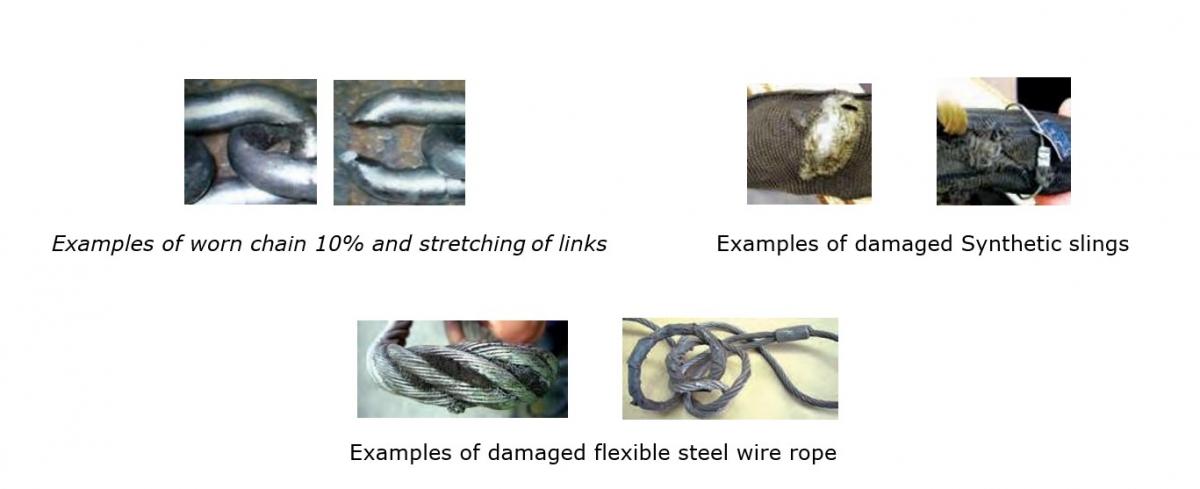
Examples of Defects
Periodic Inspection
Lifting and load restraint equipment shall be inspected, serviced, and tested, by a competent person experienced in the inspection of lifting equipment. To ensure safety compliance, inspections will be undertaken in accordance with relevant Australian Standards or Manufacturers specification.
Proof loading testing, if required, shall be carried out by an authorised organisation.
Equipment shall be tagged and a register of inspection maintained.
The frequency of periodic inspection will be based on the Standard and Manufacturers inspection specifications, work location and will include basis of use, severity of service conditions, nature of the lifts and experience on the service life of slings used in similar circumstances.
As a minimum slings shall be inspected by a competent person quarterly and independent inspections undertaken by a qualified authorised inspector shall not exceed 6 months for chain and wire rope slings and 3 months for all synthetic slings.
Inspection Criteria
All slings and accessories are to be removed from service if the identification and WILL markings have become detached or illegible.
Chain Slings: shall be removed from service when any of the following defects are visible:
- cut, nicked, cracked, gouged or stretched links
- twisted or bent links
- heat and chemical damage
- excessive corrosion
- worn links of more than 10% of wear
- wear at links load-bearing points
- any other apparent defects which cause doubt as to the integrity and strength of the equipment
Synthetic Slings: shall be removed from service when any of the following imperfections are visible:
- acid or caustic burns
- melting or charring
- more than 5 percent of visible stitches or stands are broken
- permanent elongation
- distorted fittings
- any other apparent defects which cause doubt as to the integrity and strength of the equipment
Wire Rope Slings: shall be removed from service when any of the following defects are visible:
- more than six randomly broken wires in one lay
- wear or scraping of one-third the original diameter of outside individual wires
- kinking, crushing, bird caging or any other damage resulting in distortion of the rope structure
- evidence of heat damage
- end attachments that are cracked, deformed or worn
- any signs of corrosion
- any other apparent defects which cause doubt as to the integrity and strength of the equipment
Lifting accessories: Shackles, Rings, Hooks etc. shall be removed from service when any of the following defects are visible:
- Wear, corrosion, spreading or deformation (greater than 10 percent of new condition)
- Visible cracking
- Nonstandard shackle pins
- Widening of hook throat opening
- Excessive play of the load pin
Any other apparent defects which cause doubt as to the integrity and strength of the equipment.
Inspection Records and Lifting Equipment Register
A record of inspection shall be kept of each lifting device and/or accessory. Results of each inspection shall be documented on the Lifting Equipment Register and retained for the extent of the sling/accessory’s service life. Individual equipment must be easily identified against the record, and in specific circumstances this might warrant further non-destructive markings be placed on the item, to distinguish it from other identical items.
Project specific Lifting Equipment Registers may be maintained as required.
Registers must contain the following information:
- item description
- Steelworks Engineering identification number including distinguishing markings
- item location
- inspection schedule and results
- serial number details including Working Load Limit
- disposal record
Repair and Disposal
Slings and accessories showing any signs of damage, defects or any uncertainty as to the integrity of the item must be withdrawn from service, and tagged with a “Do Not Operate” tag.
The equipment item must be referred to a competent person who will undertake assessment of the lifting device, and authorise repairs or disposal of the damage/defective equipment.
Cracked, broken or bent attachments must not be repaired and shall be replaced.
Repairs
All repairs shall be carried out by suitably qualified, experienced persons with reference to the original manufacturer’s specifications and any applicable standards.
All slings and accessories which undergo repair or re-condition must be tagged in accordance with the relevant standard and proof tested by the sling manufacture or a qualified inspector using the following criteria:
- the sling and attachments conform to the original strength requirements
- the sling and attachments have been marked to identify who made the repairs
- all cracked, broken or bent parts are replaced and not repaired
In circumstances where identification tags and markings have become detached or are illegible, the lifting device may be returned to service after assessment by a qualified inspector and where it is found to be in good working condition, has undergone testing which verifies its identity and Work Load Limits (WLL) or rated SWL capacity, and has been retagged.
Disposal
All defective or damaged slings and/or accessories must be rendered inoperable before disposal. Slings are to be cut up where practicable or clearly marked as being unfit for load-bearing service and disposed of immediately. The Lifting Equipment Register is to be adjusted accordingly.
Lifting Equipment:
- Chain block 0.2 – 3 tons
- Air winch 1-5 ton
- Mono beam Electric 0.5 – 5 tons
- Mono beam hand manual 0.5 – 5 tons
- A-frame 1-10 tons
- Swing arms (0.2 – 10 tons)
- Bridge Crane 1 -30 tons
- Mobile Crane 5-30 tons
- Jacks (1 – 100 tons)
- Hoist (0.2 – 20 tons
Lifting Tools
- Chains (1, 2, 3 ,4 and multiple chain points) (0.5 – 30 tons)
- Material slings (0.5 – 20 tons)
- Cable Slings (0.5 – 20 tons)
- Eye bolts (50-300 KG)
- Hoist Rings
- Vacuum Lifts
- Magnet Lifts
- Lifting assemblies
- Shackles
Lifts Undertaken
- Fabrication pieces
- Parts and components
- Pallets and baskets