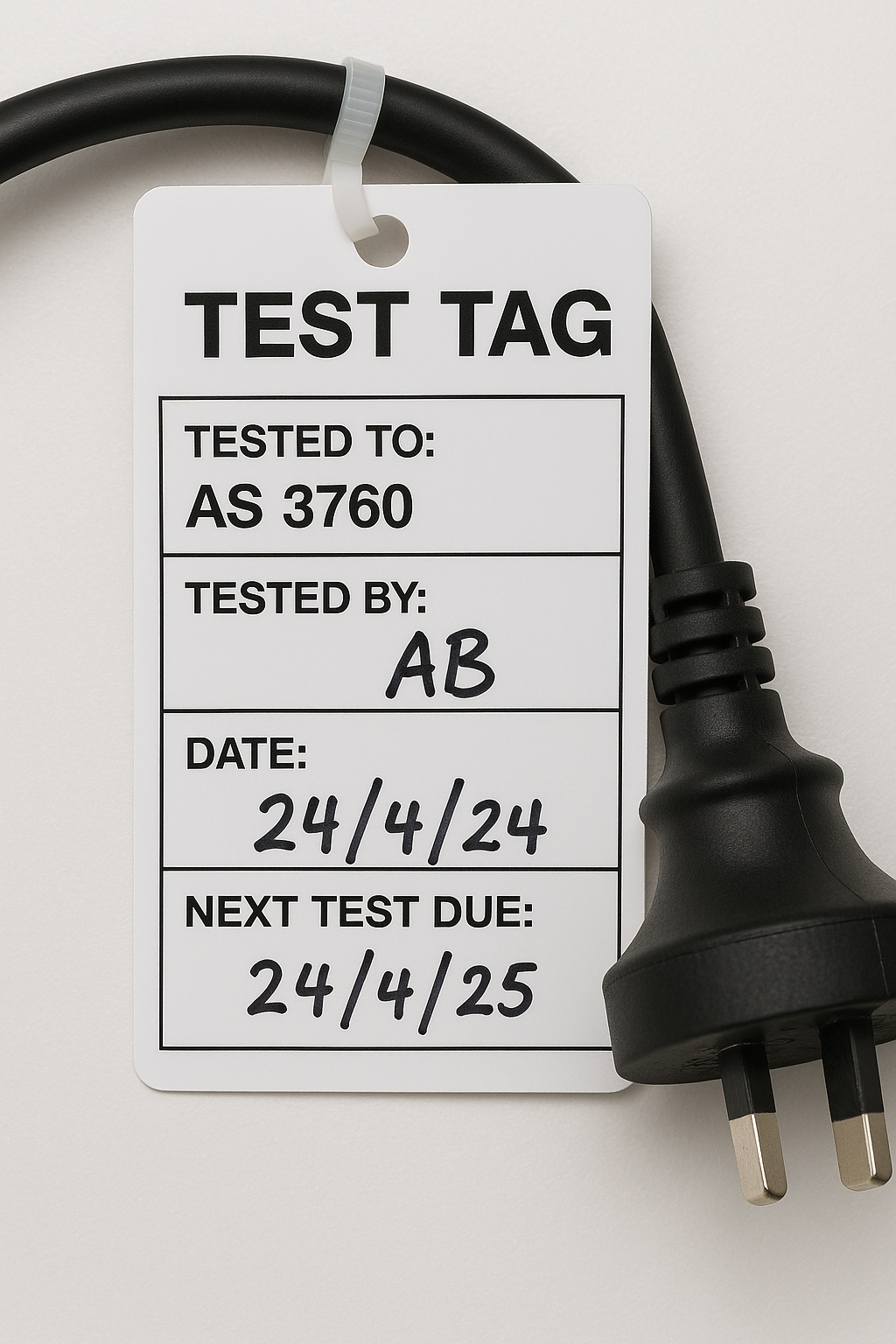
Testing & Tagging in accordance with: AS/NZS 3760:2022
In-service safety inspection and testing of electrical equipment and RCD’s, and AS/NZS 5762 In-service safety inspection and testing – Repaired electrical equipment.
Testing must be undertaken by a ‘competent person’ – generally an electrician, otherwise someone competent to carry out tests with a ‘pass-fail’ portable equipment tester.
Regular testing must be carried out where equipment is used in hostile
environments such as construction sites.
Hostile environments include those where equipment is exposed to:
- Moisture
- Vibration
- Heat
- Mechanical damage
- Corrosive chemicals
- Dust
Testing must be undertaken:
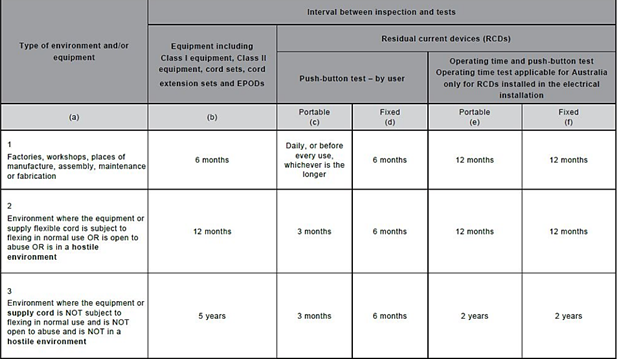
- At regular intervals in accordance with AS/NZS 3760.2022 In-service
safety inspection and testing of electrical equipment. - As a general rule, testing should be carried out at least annually.
- As recommended by the manufacturer.
- When it is returned from repair.
- Before first use if purchased second hand.
- Brand new equipment does not have to be tested. However, it should be
tagged with a ‘new to service’ tag to indicate when the first inspection is
to take place. - Equipment must be taken out of service if it is suspected of being faulty. It must be labelled ‘out of service’ and must not be used again until it has been repaired and tested.
NSW WHS Regulations 2025 – Section 150
Test and Tag of Electrical Equipment
| Requirement Area | Summary of Requirements |
| When Section 150 Applies | Section 150 applies where electrical equipment is supplied with electricity through a socket outlet and is used in an environment where normal use exposes the equipment to conditions likely to cause damage or reduce its expected life span. |
| Exposure Conditions Triggering Inspection and Testing | Inspection and testing is required where the equipment is exposed to conditions such as moisture, heat, vibration, mechanical damage, corrosive chemicals or dust. |
| Mandatory Inspection and Testing | Where the Section 150 conditions apply, the PCBU must ensure the electrical equipment is regularly inspected and tested. |
| Competent Person Requirement | Inspection and testing must be carried out by a competent person. |
| Testing Records | A record of testing must be kept until the equipment is next tested, permanently removed from the workplace or disposed of. |
| Tagging | The testing record may be in the form of a tag attached to the equipment. |
| New and Unused Equipment | New and unused electrical equipment is not required to be tested before first use, but it must be inspected for obvious damage before being used. |
| When Test and Tag is Not Mandatory | Test and tag is not mandatory under Section 150 where the electrical equipment is not supplied through a socket outlet or is not used in an environment where normal use exposes it to conditions likely to damage the equipment or reduce its expected life span. |
| Office Environments | Typical office or administrative environments are generally not subject to mandatory test and tag under Section 150 where equipment is not exposed to moisture, heat, vibration, mechanical damage, corrosive chemicals, dust or similar damaging conditions. |
| Low-Risk Equipment | Low-risk office equipment such as computers, monitors, printers, chargers and similar appliances does not require mandatory test and tag under Section 150 unless the use or location exposes the equipment to the specified damage conditions. |
| Continuing WHS Duty | Where mandatory test and tag is not required, the PCBU must still manage electrical risks and ensure electrical equipment is safe, maintained and inspected for obvious damage or faults. |
| Unsafe Equipment | Electrical equipment that is damaged, defective or unsafe must not be used and should be removed from service until repaired, tested or replaced. |